| Name | Image | Origin | Description and distinctive ingredients |
| Ají de gallina |  | Republic of peru | Peruvian chicken stew |
| Alicot | | France | Stew made with poultry giblets and possibly the head, feet and fly tips. |
| Andrajos | 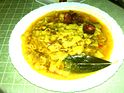 | Spain (Jaén) | Stew of tomatoes, onions, garlic, red pepper and rabbit, thickened with cake flour. |
| Asam pedas |  | Indonesia
Malaysia | Sour and spicy stew dish made of seafood cooked in tamarind fruit juice, chili and other spices. |
| Balbacua |  | Philippines | Beef stew made from beef and collagen-rich parts of beef stewed for four to six hours in various spices. |
| Bamia | 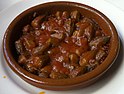 | Egypt | Egyptian stew prepared with lamb and okra as principal ingredients. |
| Beef bourguignon |  | France (Burgundy) | Stew made of beef braised in red wine (traditionally red Burgundy)[ane] and beefiness broth, by and large flavoured with garlic, onions and a boutonniere garni, with pearl onions and mushrooms. |
| Beef Stroganoff | 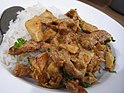 | Russia | Beef Stroganoff or beef Stroganov (Russian: бефстроганов befstróganov) is a Russian dish of sautéed pieces of beefiness served in a sauce with smetana (sour cream). |
| Bicol Express |  | Philippines | Stew made from long chillies, coconut milk, shrimp paste or stockfish, onions, pork, and garlic. |
| Bigos |  | Poland
Ukraine
Lithuania | Stew that features white cabbage, sauerkraut, diverse cuts of meat and sausages, often whole or puréed tomatoes, dearest and mushrooms as ingredients. |
| Birnen, Bohnen und Speck |  | Frg | Typical dish in which pears, beans and bacon are cooked together. |
| Birria | 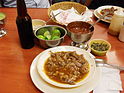 | Mexico | Spicy meat stew made of pork, goat, lamb, or mutton that is traditionally served on holidays, such equally Christmas. |
| Blanquette de veau |  | France | Vivid veal ragout with mirepoix. |
| Blindhuhn | 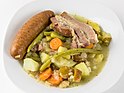 | Westphalia, Federal republic of germany | A stew of the Westphalian cuisine prepared with beans, vegetables and bacon |
| Booyah | 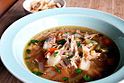 | United states of america (Upper Midwestern) | Thick stew popular in the Upper Midwestern United States with meat and vegetables. Ofttimes prepared communally in large kettles, with several unlike meats. |
| Bosnian Pot |  | Bosnia and Herzegovina | Typical Bosnian dish with ingredients: beef, lamb, cabbage, potatoes, tomatoes, carrots, parsley, garlic, and peppercorns (whole, not ground). |
| Bouillabaisse | 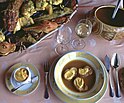 | French republic (Marseille) | Bony fish and seafood stew with vegetables and Provençal herbs and spices. The name refers to a "simmering eddy", the temperature of cooking the stew. |
| Brongkos |  | Indonesia (Yogyakarta and Central Coffee) | Meat (beef or mutton) with beans (black-eyed peas or kidney beans) stew, with boiled egg and spicy soup made of Pangium edule, coconut milk and other spices. |
| Brodetto |  | Italian republic | Fish stew typical of the Eastern (Adriatic) coast of Italy. It may slightly vary from place to identify: in Veneto it can be eaten with polenta, while in Abruzzo tomato sauce is added. Like to Croation brudet. |
| Brudet | 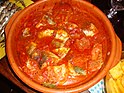 | Croatia | Fish stew that is normally eaten with polenta. Similar to Italian brodetto. |
| Brunswick stew | 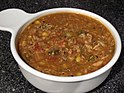 | U.s.a. (Southern) | Tomato-based stew containing diverse types of lima beans or butter beans, corn, okra, and other vegetables, and one or more types of meat. Most recipes challenge authenticity telephone call for squirrel or rabbit meat, but chicken, pork, and beef are also common ingredients. |
| Buseca | | Italy Argentina Uruguay | Italian stew common in Uruguay and Argentine republic, similar to callos, information technology is made of finely chopped mondongo (beef tripe), potatoes and legumes such as lentils or chickpeas. |
| Buddha Jumps Over the Wall |  | China | Cantonese variation on shark fin soup. |
| Buğu kebabı | | Turkey | Turkish lamb and vegetable stew with a kebab proper name. |
| Bouillon | 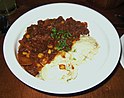 | United States (Midwestern and Southern) | Traditionally made with wild game, this spicy thick stew is like to Irish gaelic or Mulligan stew, often served with cornbread or corn muffins. Often prepared communally, with several different meats. |
| Cabbage stew |  | Central Europe | Prepared using cabbage as a principal ingredient. Pictured is kapuska. |
| Cacciucco |  | Italy | Fish stew with several different types of fish and shellfish cooked in vino, tomatoes, and chili pepper. Typical of Westward-Fundamental Italian republic and especially Livorno. |
| Cachupa |  | Greatcoat Verde | Slow cooked stew of corn (hominy), beans, and fish or meat (sausage, beef, caprine animal or chicken). |
| Caldeirada |  | Portugal | Stew consisting of a big variety of fish, and sometimes shellfish, with potatoes, tomatoes and onions. |
| Caldereta de cordero | 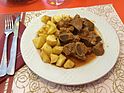 | Spain | Lamb or mutton stew. |
| Caldo avá | | Paraguay | Stew made of beef tripes, chitterlings, heart and matambre. |
| Caldo gallego |  | Spain | Stew made with fat pork, white beans, and greens (cabbage or spring greens). Literally means "Galician stew". |
| Callaloo |  | Caribbean
Westward Africa | Caribbean dish made of foliage vegetables, amaranth, capsicum and taro. |
| Callos |  | Kingdom of spain | Stew common across Spain, and is considered traditional to Madrid. In Madrid, it is referred to as callos a la madrileña. Contains beef tripe and chickpeas, blood sausage and bell peppers. Chorizo sausage may besides exist used. |
| Caparrones |  | Spain (La Rioja) | Stew made of caparrón (a variety of blood-red kidney beans) and a spicy chorizo sausage. |
| Capra e fagioli | | Italy (Liguria) | Stew made of goat meat, white vino and white Pigna beans |
| Carbonade flamande |  | Belgium | Traditional Belgian sweet-sour beef and onion stew made with beer, and seasoned with thyme and bay leaf. Pictured is carbonade flamande with chips and a side of greens. |
| Carne mechada | 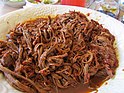 | Republic of colombia
Chile
Venezuela[2] | Latin American beef stew. |
| Cassoulet | 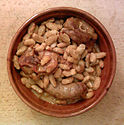 | French republic (Languedoc) | French dish that consists of slow-cooked meat (typically pork sausages, pork, goose, duck, and sometimes mutton) with white haricot beans. |
| Cawl |  | Wales | Lamb stew (beef or hock in Pembrokeshire) which includes vegetables, such equally leeks and potatoes, likewise as carrots, celery, onion, parsnip, swede, and turnip. |
| Chairo |  | Bolivia | Meat and vegetable stew with potato starch (chuños), onions, carrots, potatoes, white corn, beef and wheat kernels. |
| Chakapuli |  | Georgia | Popular stew with lamb chops or veal, onions, tarragon leaves, ruby plums or tkemali (ruby plum sauce), dry white wine, mixed fresh herbs (parsley, mint, dill, coriander), garlic and salt. |
| Chapea | | Dominican Republic | Traditional dish from the countryside that consists of cooked red beans with longaniza (Dominican sausage), rice, ripe plantain and mashed squash, which is used equally a thickener. |
| Craven mull | 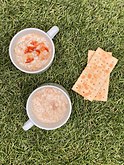 | United States (Southern) | Traditional dish from North Carolina and Georgia. Information technology is a type of stew consisting of parboiled whole chicken in a foam or milk based goop with butter, seasoned with salt, pepper and other ingredients. Traditionally, the stew is served in the tardily autumn and winter months. Ofttimes prepared communally. |
| Chili con carne | 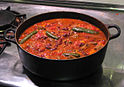 | United States (Texas) | A spicy stew that traditionally features chopped or ground beef, peppers and other ingredients. |
| Cholent |  | Judea | Slowly simmered Jewish stew that cooks overnight and is traditionally served on Shabbat. Principal ingredients are meat, potatoes, chickpeas, and barley; some recipes (Sephardi) include rice and substitute chicken for beefiness. |
| Chupe Andino | | Andes | Refers to various stews and soups that are prepared in Andes Mountains region of Due south America. |
| Ciambotta |  | Italy | Based on vegetables, but may take other ingredients, such as meat or fish. The vegetable choices are normally potatoes, eggplant, tomatoes, sweet peppers, chili, onion and herbs. |
| Cioppino |  | U.s.a. (San Francisco) | Italian-American fish stew that is traditionally made from the take hold of of the day, which in the dish's place of origin is typically a combination of Dungeness crab, clams, shrimp, scallops, squid, mussels and fish. The seafood is then combined with fresh tomatoes in a wine sauce, and served with toasted staff of life, either sourdough or baguette. |
| Cocido lebaniego |  | Spain (Cantabria) | Stew whose essential ingredients include chickpeas, potatoes and collard greens. The remainder of the elements are compangu, meat from the sus scrofa slaughter, such as bacon (tocino), black pudding (morcilla), chorizo and ham. Other additional ingredients are beef, especially cecina and bones, and a stuffing made of staff of life flour, egg and parsley. |
| Cocido madrileño | 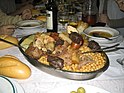 | Spain (Madrid) | Stew whose main ingredient is the chickpea or garbanzo bean, preferably of its larger diversity (besides known every bit kabuli). Vegetables are added: potatoes mainly, but also cabbage, carrots, and turnips. In some cases, green beans, mangold, or cardoon are also added. |
| Cocido montañés | 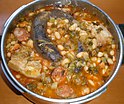 | Spain (Cantabria) | Highlander stew is fabricated with two vegetal ingredients, dried large white beans and collard greens (berza). The remainder of the elements of this recipe are known as compangu, meat ingredients from the hog slaughter: bacon (tocino), pork ribs (costilla), black pudding (morcilla) with rice, and chorizo. |
| Compote | | | Game stew made for instance from rabbit, partridge, or pigeon. |
| Coq au vin | 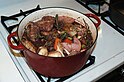 | France | French braise of craven cooked with wine, lardons, mushrooms, and optionally garlic. |
| Cotriade |  | France (Brittany) | Breton-manner stew made with potatoes and many kinds of fish, but without shellfish. |
| Cozido/Cocido |  | Portugal
Espana | Stew made with different meats and vegetables; numerous regional variations exist throughout Portugal and Spain. |
| Daube |  | France (Provence) | Classic Provençal stew made with inexpensive beefiness braised in wine, vegetables, garlic, and herbes de Provence, and traditionally cooked in a daubière, a braising pan. |
| Dillegrout | | England | Chicken pottage made with almond milk, carbohydrate, and spices traditionally presented at coronations of English monarchs by the lord of the estate of Addington.[iii] |
| Dimlama |  | Uzbekistan | Stew made with various combinations of meat, potatoes, onions, vegetables, and sometimes fruits. |
| Dinuguan | 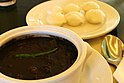 | Philippines | Filipino savory stew of meat or offal (typically lungs, kidneys, intestines, ears, heart and snout) simmered in a rich, spicy dark gravy of pig blood, garlic, chili (most often siling mahaba), and vinegar. |
| Drokpa Katsa | | Tibet | Stewed tripe, with curry, fennel, monosodium glutamate, and table salt. |
| Escudella i carn d'olla |  | Spain (Catalonia) | Stew that contains a pilota (a very big meatball spiced with garlic and parsley); it likewise contains vegetables, such as celery, cabbage, carrots, etc. depending on the season. Additionally, bones, sausages chosen botifarras, and other types of meat tin can be used. |
| Étouffée | 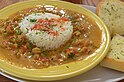 | The states (Louisiana) | Seafood dish of the Creole cuisine of Louisiana that is usually served with shellfish over rice. Literally means "smothered" in French. |
| Fabada Asturiana |  | Kingdom of spain (Asturias) | Fabada is made with dried large white beans (fabes de la Granja, soaked overnight earlier apply), shoulder of pork (Lacón Gallego) or bacon (tocino), black pudding (morcilla), chorizo, and oft saffron (azafrán). Some recipes also telephone call for longaniza. |
| Fabes con almejas |  | Spain (Asturias) | Mollusk stew that calls for small clams, fava beans, onions, garlic, salt, saffron, bay leaves, olive oil, parsley, bread crumbs and sometimes sweet paprika. |
| Fahsa |  | Yemen | Stew made of lamb cutlets with lamb broth. Spices and holba (fenugreek) are added after cooking. |
| Fårikål |  | Kingdom of norway | Traditional dish, consisting of pieces of mutton with bone, cabbage, whole black pepper and a little wheat flour, cooked for several hours in a casserole, traditionally served with potatoes boiled in their skins. Literally means "mutton in cabbage". |
| Fasole cu cârnaţi |  | Romania | Dish consisting of baked beans, sausages or smoked ham. |
| Feijoada | 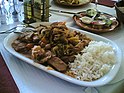 | Brazil
Portugal | Stew of beans with beef or pork, and may include other vegetables. |
| Fesenjān |  | Islamic republic of iran | Thick, tart stew made from pomegranate juice and ground walnuts; traditionally made with poultry, only variants using balls of ground meat, ghormeh cut lamb, fish, or no meat at all are not unusual. |
| Flaki |  | Poland | Meat stew with common ingredients, including beef tripe, beefiness, bay leaf, parsley, carrots, beef goop, and spices to taste, including salt, black pepper, nutmeg, sweet paprika, and marjoram. |
| Főzelék |  | Hungary | Very thick vegetable soup, so it may be considered a stew. Sometimes served with meatballs and often eaten equally a side dish. |
| Fricot | 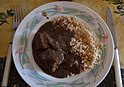 | Canada (Acadia) | Consists of potatoes, onions, and whatever meat was available, cooked in a stew and topped with dumplings. The common meats used are chicken (fricot au poulet), clams (fricot aux coques), rabbit (fricot au lapin des bois), beef, or pork. |
| Gaisburger Marsch | 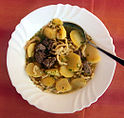 | Deutschland (Swabia) | Swabian dish fabricated from meat with cooked potatoes and spätzle. |
| Galinhada | 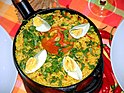 | Brazil | Stew of rice and chicken. |
| Garbure | 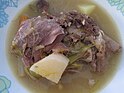 | French republic (Gascony) | Stew of ham with cabbage and other vegetables, usually with cheese and dried bread added. |
| Ghapama | 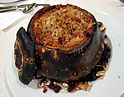 | Armenia | Sweet pumpkin stew, traditionally cooked in the pumpkin shell; does not contain meat. |
| Ghormeh sabzi |  | Islamic republic of iran | Dish that consists of a mixture of sautéed herbs, consisting mainly of parsley, leek, and a smaller amount of fenugreek leaves, where this is usually the dry herb of the mix. |
| Caprine animal water |  | Montserrat | A national dish of Montserrat prepared with goat meat and vegetables. |
| Casserole | 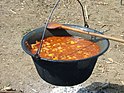 | Hungary | Soup or stew of meat, noodles and vegetables (especially irish potato), seasoned with paprika and other spices. |
| Guatitas |  | Chile
Ecuador | Stew whose main ingredient is pieces of tripe. |
| Gumbo | 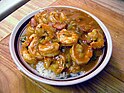 | U.s.a. (Louisiana) | Stew or soup that consists primarily of a strongly-flavored stock, with meat or shellfish, a thickener, and the vegetable "holy trinity" of celery, bell peppers, and onions. |
| Güveç | 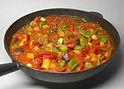 | Turkey | Vegetable and meat stew fabricated with mutton or veal and mutual to Balkan countries. |
| Guyana Pepperpot | 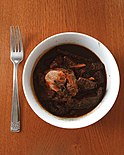 | Guyana | Stewed meat dish, strongly flavored with cinnamon, hot chili peppers, and cassareep (a special sauce made from the cassava root). Beef, pork, and mutton are the almost popular meats used, though chicken is as well used. |
| Hachee | 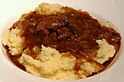 | Netherlands | Traditional Dutch stew based on diced meat, fish or poultry, and vegetables. |
| Hasenpfeffer | 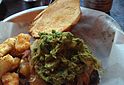 | Federal republic of germany | Traditional German stew fabricated from marinated rabbit or hare, cut into stewing-meat sized pieces and braised with onions and vino, in a marinade thickened with the beast's claret. |
| Hochepot | 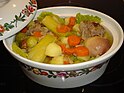 | France | Flemish stew made with oxtail, shoulder of mutton, salted bacon, and vegetables. |
| Hoosh | | Usa | Thick stew made from pemmican (a mix of dried meat, fat, and cereal) or other meat, thickener such as ground biscuits, and water. Used on expeditions to frozen polar regions. |
| Hot pot | 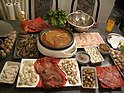 | Cathay
Mongolia | Stew fabricated with a variety of raw meats, seafood, vegetables, noodles, dumplings, etc., all cooked at the tabular array in a simmering hot pot of broth. |
| Irish stew |  | Republic of ireland | Traditional stew made from lamb or mutton, as well as potatoes, carrots, onions, and parsley. |
| Islim or patlıcan kebabı | 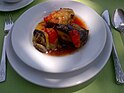 | Turkey | Traditional stew fabricated from veal or mutton and eggplants, also having tomatoes and greenish peppers. |
| Istrian stew | 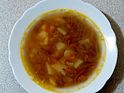 | Croatia | Stew whose main ingredients are beans, sauerkraut, potatoes, bacon, and spare ribs; the master seasoning is garlic. |
| Kadhi |  | Indian subcontinent | Spicy stew whose thick gravy is based on chickpea flour (chosen besan in Hindi) and contains vegetable fritters called pakoras, to which sour yoghurt is added to give it a little sour taste. |
| Kadyos, baboy, kag langka | | Philippines | Pigeon peas, ham hock, and jackfruit soured with batuan fruits (Garcinia binucao)[four] |
| Kadyos, manok, kag ubad | | Philippines | Pigeon peas, chicken, and banana pith[5] [half-dozen] |
| Kaldereta | 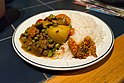 | Philippines | Dish whose common ingredients are goat shoulders with tomato paste and liver spread. |
| Kalops | | Sweden | Swedish stew made of beef, onion, allspice, bay leaves and sometimes carrots. Often eaten with beetroot and potatoes. |
| Kamounia | 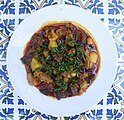 | Sudan, Egypt, and Tunisia | Beef and liver stew prepared with cumin |
| Kapuska |  | Turkey | Cabbage and veal stew. |
| Kare-kare | 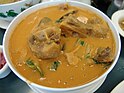 | Philippines | Popular stew made from a peanut-based sauce with a variety of vegetables, stewed oxtail, beef, and occasionally offal or tripe. Meat variants may include goat meat or (rarely) chicken. |
| Karelian hot pot |  | Republic of finland | Stew that features a combination of pork and beefiness, only lamb can also be used. The hot pot is usually seasoned with black peppercorns and common salt. Other seasonings such as allspice and bay leaf may be used too. Common vegetables such every bit carrot, onion, and root vegetables are acceptable additions to the stew. |
| Kig ha farz |  | France (Brittany) | Stew consisting of various meats (hock, beefiness and lamb) simmered in a broth with carrots, potatoes, cabbage and a large buckwheat flour based dumpling. Literally means "meat and stuffing" in Breton. Known mainly in Finisterre. |
| Korma |  | India, Pakistan, Bangladesh | Meat and/or vegetables is seared, so braised with stock or yogurt kept beneath curdling temperature with a mixture of spices (including footing coriander, cumin, and Indian bay. Traditionally cooked in a pot set over a very low fire, with coals on the lid. A korma can be mildly spiced or fiery, and may use lamb, beefiness, chicken, fish; some kormas combine meat and vegetables such as spinach or cauliflower. |
| Kuru fasulye | 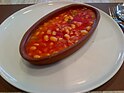 (Epitome of version without meat) (Epitome of version without meat) | Turkey | Stew consisting of dry beans, generally with meat (veal or mutton) and pastırma or sucuk in its broth, with tomato paste. |
| Lancashire hotpot | 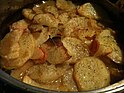 | United Kingdom (England) | Dish made traditionally from lamb or mutton, and onion topped with sliced potatoes, left to bake in the oven all day in a heavy pot and on a low heat. |
| Läskisoosi |  | Republic of finland | Pork chops grilled in butter with onions and flour, stirred in water with salt and pepper. |
| Lecsó |  | Republic of hungary
Czech republic | Thick vegetable stew which features peppers, love apple, onion, lard, salt, sugar and ground paprika as a base recipe. |
| Linat-an | | Philippines | Pork stew or soup from the Visayas and Mindanao islands of the Philippines that characteristically uses pork ribs (or other bony cuts of pork) simmered until very tender, lemongrass (tanglad), string beans, starchy ingredients for a thicker soup (normally taro), and various other vegetables. |
| Lobster stew | 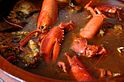 | Spain (Menorca) | Stew made from lobster, which is added to a sofrito with onion, tomato, garlic and parsley; then boiled, and is eaten with thin slices of staff of life. |
| Locro | 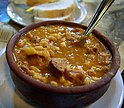 | Argentina
Republic of bolivia
Chile
Republic of ecuador
Peru | Hearty thick stew whose main ingredients are corn, some form of meat (usually beef, pork, and chorizo, simply sometimes beef jerky or cheese), and vegetables. Other ingredients vary widely, and typically include onion, beans, irish potato, squash or pumpkin. |
| Lunggoi Katsa | | Tibet | Dish consisting of stewed sheep'due south head, with back-scratch, fennel, monosodium glutamate, and salt. |
| Maafe |  | West Africa | Stew that is made from lamb, beef, or chicken, cooked with a sauce based on tomatoes and groundnuts (peanuts). |
| Maconochie | | United Kingdom (England) | Stew of sliced turnips and carrots in a thin soup that was specially made by the "Maconochie Visitor" for soldiers during World War I |
| Mazamorra |  | Latin America, Portugal, Spain | Stew prepared with corn (maize) as a primary ingredient. |
| Mechado |  | Philippines | Stew of Castilian origin, traditionally fabricated with larded beef, merely now likewise made with bacteria cuts. Marinating in soy sauce and calamansi juice requite information technology a Filipino flavor. |
| Mjave lobio |  | Georgia | Dish of stewed beans, tomatoes and onion. |
| Moambe |  | Primal Africa | Dish prepared with a sauce normally made from the pericarp (not the seeds) of palm basics, the fruit of the African oil palm. |
| Mocotó |  | Brazil
Portugal | Dish made from moo-cow'southward feet, stewed with beans and vegetables. |
| Molagoottal | | India | South Indian stew with coconut and lentils as a base of operations. |
| Moqueca |  | Brazil | Stew based on table salt h2o fish stew, tomatoes, onions, garlic and coriander. |
| Mulligan stew | | United states | Dish like to Irish stew, Brunswick stew, or bouillon, as improvised past American hobos from available or scavenged ingredients, such equally squirrel or opossum. |
| Navarin |  | France | French ragoût (stew) of lamb or mutton. Frequently, vegetables are added. |
| Ndolé |  | Cameroon | National dish of Republic of cameroon, a stew of nuts, ndoleh (bitter leaves indigenous to West Africa), and fish or ground beef. |
| Nikujaga |  | Japan | Japanese dish of meat, potatoes and onion stewed in sweetened soy sauce, sometimes with ito konnyaku and vegetables. |
| Nilaga |  | Philippines | A traditional meat stew or soup from the Philippines made with boiled beef (nilagang baka) or pork (nilagang baboy) with diverse vegetables. Information technology is typically eaten with white rice and is served with soy sauce, patis (fish sauce), labuyo chilis, and calamansi on the side.[vii] [8] |
| Oil Downwardly | | Grenada | Stew fabricated of breadfruit, salted meat, craven, dumplings, callaloo, and other vegetables, all stewed in coconut milk, herbs, and spices. National dish of Grenada, but too popular in Trinidad and Tobago (with hot peppers and no dumplings.) |
| Olla podrida |  | Spain | Castilian stew made from pork and beans and an inconsistent, wide variety of other meats and vegetables, oft including chickpeas, depending on the recipe used. |
| Ollada | | Espana (Valencia) | Stew based on boiling vegetables and meat in a casserole. |
| Ostrich stew | | South Africa | Ostrich stew is a stew prepared using ostrich meat as a primary ingredient. Boosted ingredients tin can include vegetables such as onion, celery and carrot, tomatoes, soup stock and wine. |
| Ostropel |  | Romania | Stew that is primarily made from chicken mixed with a thick lycopersicon esculentum sauce. |
| Oyster stew |  | United States | Stew fabricated from oysters with milk and cream |
| Paya | 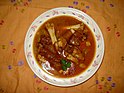 | Pakistan, India | Stew fabricated with alliums, ginger, spices, and (goat or sheep) trotters. Coveted for its spicy and fatty broth which is rich in gelatin and animal fatty (both rendered from the trotter bones and joints). It is preferred as breakfast with Naan bread. |
| Paila marina |  | Chile | Typical stew that is usually made of a shellfish stock containing different kinds of cooked shellfish and fish. These are complemented with a variety of herbs and spices such as garlic, cilantro, and onion. |
| Palaver sauce |  | West Africa | Stew popular in Western Africa that has many regional varieties and may contain beef, fish, shrimp, pepitas, cassava, taro (cocoyam) leaves, and palm oil. It is served with boiled rice, potatoes, garri, fufu, or yams. |
| Paomo | 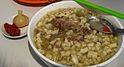 | China | Stew of chopped-upwards broiled unleavened breadstuff cooked in lamb broth and served with lamb meat. Information technology is frequently eaten with pickled garlic and chilli sauce. |
| Pasulj (also known as grah) |  | Serbia, Montenegro, Bosnia, Croatia and Slovenia | Bean soup made of usually white, cranberry or pinto beans. Information technology is ordinarily prepared with meat, particularly smoked meat such as smoked bacon, sausage, and ham hock, and is a typical wintertime dish. |
| Philadelphia Pepper Pot | | United states (Pennsylvania) | Thick stew of beef tripe, vegetables and other seasonings; originates in the cuisine of the Pennsylvania Dutch. |
| Pichelsteiner |  | Frg | German stew that consists of several types of meats and vegetables. Common ingredients are beef, pork and mutton, also every bit potatoes, carrots and leek. |
| Pinangat | 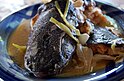 | Philippines | Filipino stew fabricated of taro leaves, chilli, meat and coconut milk wrapped in gabi leaves and tied securely with coconut leafage. |
| Pindang | 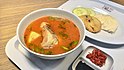 | Indonesia
Malaysia | Stew made of by boiling ingredients (specially fish) in common salt and certain spices. |
| Piperade |  | Spain (Basque country) | Typical Basque dish prepared with onion, green peppers, and tomatoes sautéed and flavored with ruby Espelette pepper.[9] |
| Pisto | 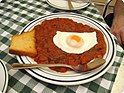 | Kingdom of spain (Murcia) | Stew made of tomatoes, onions, eggplant or courgettes, green and ruby-red peppers and olive oil. |
| Pörkölt |  | Hungary | Hungarian stew that consists of meat, paprika, and sometimes vegetables, merely no potatoes. Information technology should not be confused with goulash, which does always incorporate potatoes and is more like a soup. |
| Pot-au-feu |  | French republic | French beef stew. Other ingredients may differ from region to region, only normally diverse kinds of vegetables are included, such as carrots, turnips, leeks, celery and onions. |
| Potjiekos |  | Southward Africa | South African stew that is ordinarily prepared outdoors. The recipe commonly contains meat, vegetables, starches like rice or potatoes, all boring-cooked with Dutch-Malay spices, the distinctive spicing of South Africa's early culinary melting pot. Other common ingredients include fruits and flour-based products like pasta. |
| Pottage |  | United Kingdom | Thick soup or stew made past boiling vegetables, grains, and, if available, meat or fish. Pottage commonly consisted of various ingredients hands available to serfs and peasants, and could exist kept over the fire for a period of days, during which time some of it was eaten and more ingredients added. The effect was a dish that was slowly but constantly evolving, a "perpetual stew". |
| Pozole | 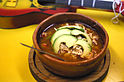 | Mexico | Mexican stew with ritual significance fabricated from maize with meat, usually pork, chicken, turkey, or pork rinds, with chili peppers, and other seasonings and garnishes. Vegetarian and vegan versions likewise exist. |
| Puchero | 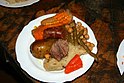 | South America
Spain | Stew whose ingredients may vary greatly according to region. Its equivalent may be the Spanish cocido. |
| Qoiri | | Tibet | Stew of mutton chops, made with flour, shredded wheat, chilli, dry out curd cheese, water and common salt. |
| Rabbit stew | 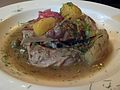 | | Stew prepared using rabbit or hare as a main ingredient. |
| Ragout |  | France | Refers to a main-dish stew. Ragouts may be prepared with or without meat, a wide multifariousness of vegetables may exist incorporated, and they may be more or less heavily spiced and seasoned. Pictured is ragout with lentils. |
| Ratatouille | 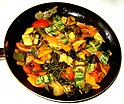 | France (Provence) | Vegetable stew from the Provence that consists mainly of tomatoes with garlic, onions, courgettes (zucchini), aubergine (eggplant), poivron (bell peppers), marjoram and basil, or bay leaf and thyme, or a mix of green herbs, such every bit herbes de Provence. |
| Red cooked pork |  | China | Braised stew fabricated with soy sauce, Chinese rice wine, caramelized sugar, and spices. Usually made with pork, but other meats, such every bit beef or chicken are also cooked in this style. |
| Rössypottu |  | Finland | Stew made using potatoes (pottu, peruna), some pork and the main ingredient, so-called "rössy" (i.e. claret pudding made of blood, beer, rye flour and some spices). |
| Rogan Josh |  | Bharat | Aromatic lamb stew native to the Indian subcontinent, which is one of the signature recipes of Kashmiri cuisine. Rogan josh consists of braised lamb chunks cooked with a gravy based on browned onions or shallots, yogurt, garlic, ginger and aromatic spices (cloves, bay leaves, cardamom and cinnamon). |
| Rubaboo | | North America | Basic stew or porridge consumed past coureurs des bois and voyageurs (fur traders), as well every bit Métis people from Due north America, traditionally made of peas or corn (or both) with grease (acquit or pork) and a thickening agent (breadstuff or flour). |
| Sagamite | | North America | Native-American stew made from hominy or Indian corn. Additional ingredients may include vegetables, wild rice, dark-brown sugar, animal fatty, beans, smoked fish or animal brains. |
| Saksang | 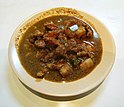 | Indonesia | Spicy stew made from minced pork or dog meat (or more than rarely, water buffalo meat) stewed in blood, coconut milk, and spices. |
| Saltah | 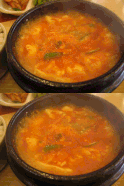 | Yemen | Considered the national dish of Yemen, the base is a brown meat stew called maraq, with fenugreek froth and sahawiq or sahowqa (a mixture of chillies, tomatoes, garlic, and herbs ground into a salsa). Common additions are rice, potatoes, scrambled eggs, and vegetables. |
| Scouse |  | United kingdom of great britain and northern ireland (England) | Variation of labskaus; a blazon of meat or beef stew. |
| Seco |  | Republic of ecuador | Stewed meat. |
| Sekba | 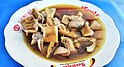 | Indonesia | Chinese Indonesian pork offals stewed in mild soy sauce-based soup. The stew tastes mildly sweetness and salty, made from soy sauce, garlic, and Chinese herbs. |
| Semur |  | Republic of indonesia | Type of meat stew that is candy in thick brown gravy. The chief material used in semur gravy is shallots, onions, garlic, kecap manis (sweet soy sauce), nutmeg, and cloves. |
| Shiro |  | Eritrea | Homogeneous stew whose primary ingredient is powdered chickpeas or wide bean repast. |
| Sinigang |  | Philippines | Filipino soup or stew characterized by its sour flavor most often associated with tamarind (sampalok). |
| Skirts and kidneys |  | Republic of ireland | Irish stew made from pork and pork kidneys. |
| Sonofabitch stew | | United states (Western) | Cowboy dish consisting of whatever is on hand. Nigh recipes call for meat and offal from a calf. |
| Spanish fricco | | Federal republic of germany | A hearty Westphalian stew prepared primarily using diced beef, potatoes and onions, typically in a foam soup base |
| Stew peas | | Jamaica | Jamaican stew prepared using coconut milk, gungo peas (dove peas) or red peas (kidney beans), uncured meats and salted meats such equally pork and beef. Tin also include onion, garlic, scallions, sus scrofa tail, herbs, and spices. |
| Sulu köfte |  | Turkey | Soup-like stew with köfte meatballs in the dish. |
| Tajine |  | Northward Africa | Berber dish from North Africa, that is named after the special earthenware pot in which information technology is cooked. It includes different ingredients according to region, but normally several kinds of vegetables, meats and spices |
| Tas kebap |  | Turkey | Veal or mutton stew with potatoes |
| Tatws Pum Munud | 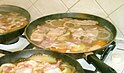 | Wales | Traditional Welsh stew, made with smoked bacon, stock, potatoes and other vegetables. |
| Tharid |  | Arab globe | Dish fabricated from pieces of breadstuff in a vegetable or meat broth. Pictured is lamb tharid. |
| Tocană | 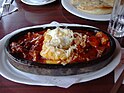 | Romania | Prepared with love apple, garlic and sweet paprika, information technology is traditionally consumed with a cornmeal mush called mămăligă. |
| Love apple bredie |  | South Africa | South African stew with Dutch origin that usually features mutton, which is cooked for a very long time, and includes cinnamon, cardamom, ginger, cloves, and chili as seasonings. |
| Tombet |  | Kingdom of spain (Mallorca) | Traditional vegetable stew that contains layers of sliced potatoes, aubergines and red bong peppers previously fried in olive oil. The aubergines and red peppers should non be peeled. The whole is topped with tomato fried with garlic and parsley, and presented in a way that it looks like a pie without a crust. |
| Tuna pot |  | Kingdom of spain (Basque country) | Fish stew that was eaten on tuna line-fishing boats in the Cantabrian Bounding main; a beautiful and simple dish with potatoes, onions, pimientos, and tomatoes. |
| Türlü |  | Turkey | Stew of mixed vegetables stew which may as well include meat. The dish is known every bit tourlou in Hellenic republic and as turli tava in N Macedonia |
| Wat (food) |  | Ethiopia
Eritrea | Stew or curry which may be prepared with meat (such equally chicken, beefiness, or lamb) or a variety of vegetables, with spice mixtures, such as berbere and niter kibbeh (a seasoned clarified butter). |
| Waterblommetjiebredie |  | South Africa | Meat, typically lamb, stewed together with waterblommetjies (Aponogeton distachyos flowers, ordinarily known equally Cape pondweed, Cape hawthorn or Cape asparagus). Literally means "small water blossom stew" in Afrikaans. |
| Waterzooi |  | Belgium (Flemish region) | Stew made of fish or chicken, vegetables (carrots, leeks, and potatoes), herbs, eggs, foam, and butter. |
| Zoervleis | | Limburg region, Kingdom of belgium and the netherlands | Traditional dish similar to High german sauerbraten which features meat (ordinarily equus caballus meat) that was marinated in vinegar or apple cider. Contrary to what ane would expect, it is sweet, as it is served with gingerbread. |
0 Response to "What Type of Beef for Stews"
Post a Comment